Fine line has become the word used to sell any small tattoo, and that muddles it. Size is not what defines it. What defines it is the needle, the amount of pigment, and the design decisions that follow from both.
The work is done with a single needle or a very small grouping, at low pressure and in a few measured passes. The line comes out thin because it is built slowly, not because it was drawn quickly — which is exactly what makes it slower to execute than an ordinary line of the same length.
Pigment moves in skin. Over years every line widens slightly, and two lines that sat too close merge into one mark. So a fine line design is drawn with gaps that look too generous on the first day: those are the gaps that will still be right a decade later.
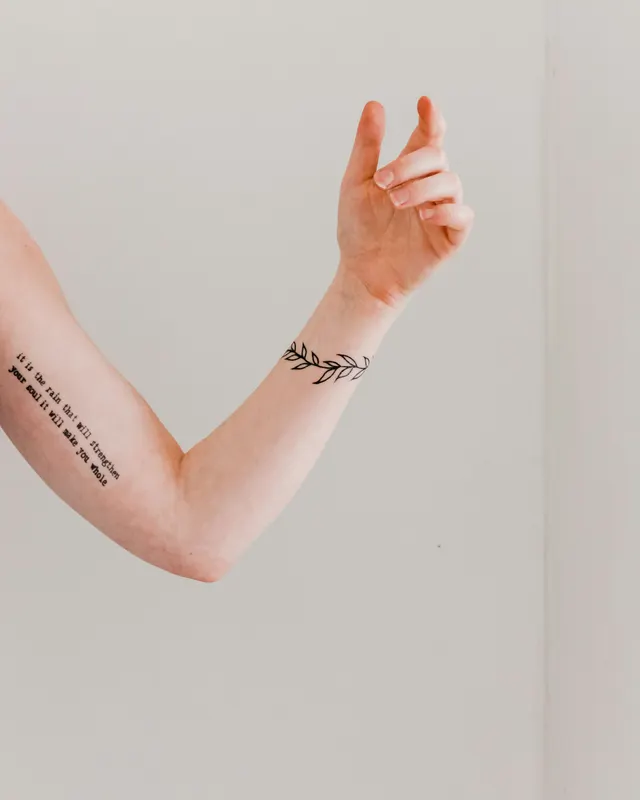
Which leads to the part that is hardest to hear: some designs do not work at the size you asked for. A whole sentence in handwriting the size of a coin will read for a year and then become a stroke. Better to go slightly larger than to compromise on that.
Fine line also heals differently. There is less pigment in the skin, so some lines look pale once the flaking is over. A small touch-up after a month is part of the process for many pieces in this technique, and not a sign that anything went wrong.
If you are coming with an idea, bring the idea rather than only a photograph of someone else's tattoo. The size of the area, the direction of the lines, and what you need to stay legible are what decide whether it will work.