A tattoo is judged at ten years, not at ten days. That is what makes blackwork interesting: of the common techniques, it is the one that changes least.
The reason is simple. Solid black holds a lot of pigment in an even layer, so when the skin stretches and the pigment shifts, the result is still solid black. A single line that shifts looks smudged; a field that shifts looks like a field.
What does change is the edges. The border between black and skin softens a little over the years, so a shape resting on a very sharp corner will read slightly less sharp a decade on. A good design in this technique assumes that from the start.
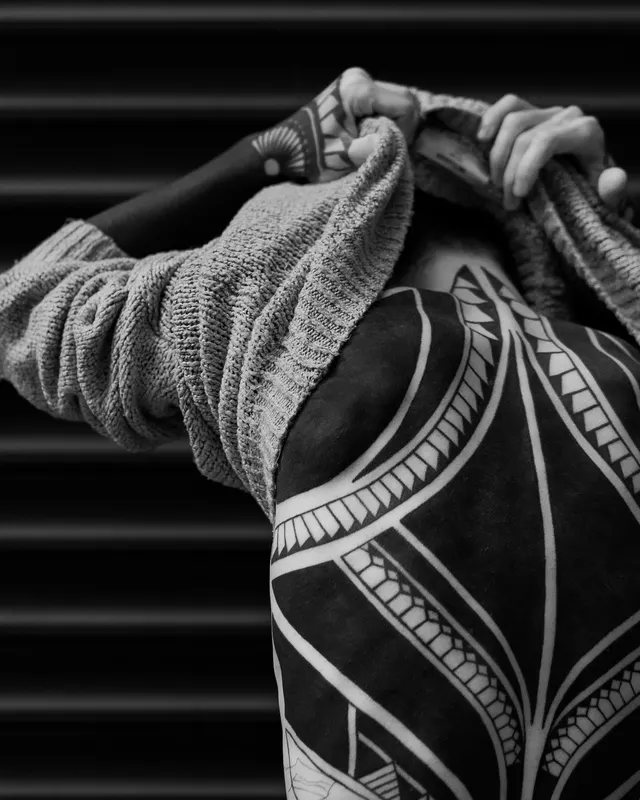
Skin tone and placement change how many passes it takes to reach an even coverage, not only how it reads at the end. An area that sees a lot of sun will also fade faster — true of any tattoo, but far more visible across a large field.
A touch-up on solid black is usually straightforward: the faded area is brought back up to coverage rather than the piece being redone. A large work may want a touch-up sitting every few years, and that is worth weighing before starting rather than after.